The problem
A trust board needs to know where each school is exposed without reading every school's papers one by one. Decisions made in the autumn lose their reasoning by the spring, and nobody can say whether an item was closed, deferred or quietly replaced.
What I built
A trust view that opens on a briefing, school by school. Each school shows Steady or Needs you, with its Headteacher Report, visits this term, improvement plan actions and open risks, and the briefing sets out what the record shows about assigned visits, approved reports and evidence coverage, with suggestions for board discussion. Tabs cover education, finance, safeguarding, website, governance, review cycles and the risk register, and the governance tab shows each school's progress through Compliance, Assurance and Continuity on the common Quality Standard.
At the end of a term, every item is explicitly carried, closed, deferred or superseded. Issued records are immutable and changes become amendments, so the history stays a history.
Design decisions
It reads from the same records the schools keep, so the trust view and the school view never disagree. Exports are reviewed against their underlying evidence before they go into board papers.
What you can see
The briefing, the subject tabs, and exports including a trust board cover sheet, Headteacher Reports, expiring governor terms, the Quality Standard overview, improvement priorities and the risk register roll-up.
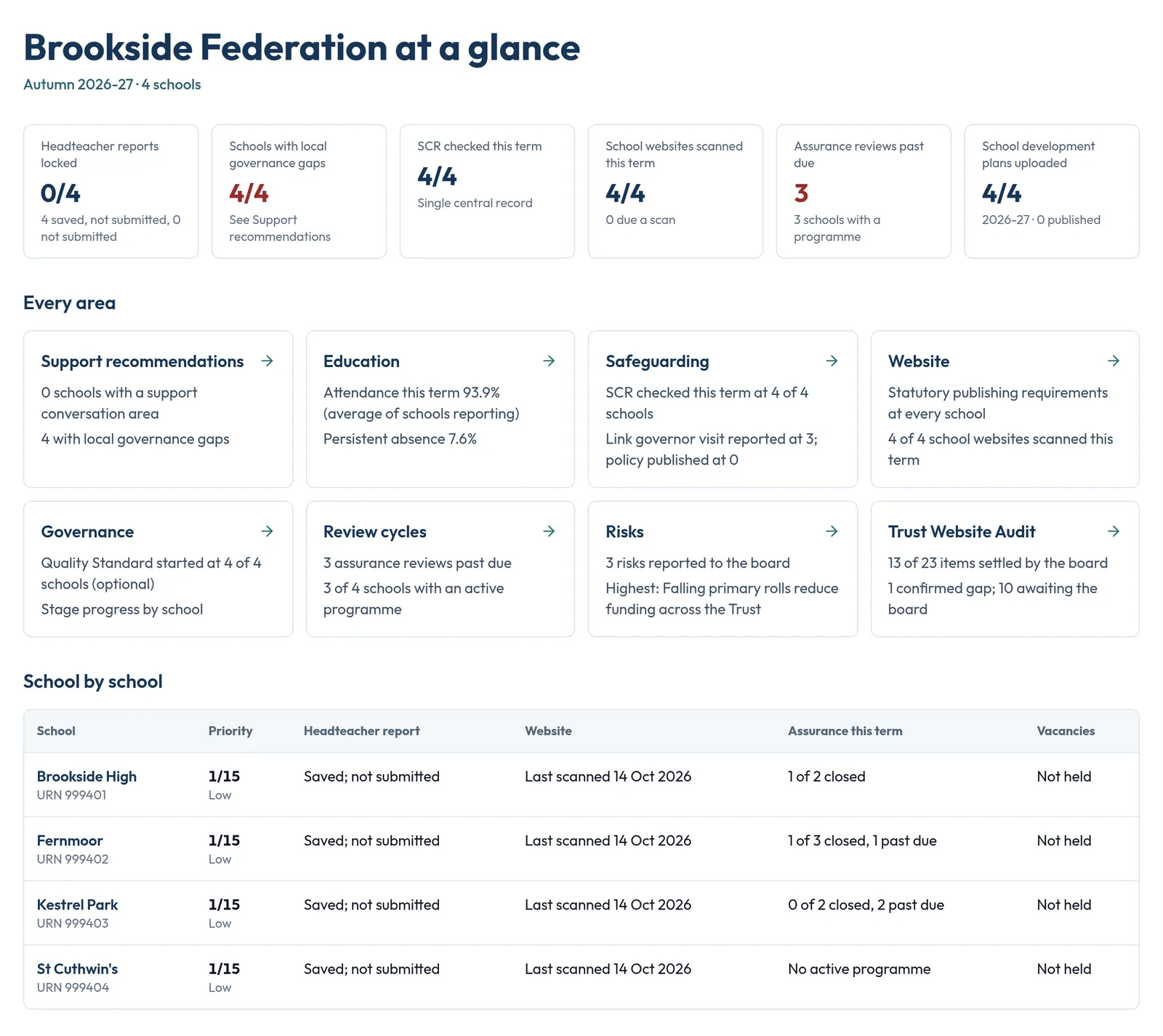 (opens the full-size screenshot in a new tab)
The result
Trustees see where every school stands before the board meets, built from evidence rather than assembled by hand, with the reasoning and the owner of each decision intact from one term to the next.