The problem
Every headteacher writes a termly report in a different format. Governors get a document that is hard to compare with last term's, and none of it reaches a shared record the board can build on.
What I built
A termly report in eleven steps: pupil numbers, attendance, staffing, budget, improvement plan progress, behaviour and exclusions, Pupil Premium, SEND, curriculum and deep dives, safeguarding, and inspection data. Changes save as the headteacher types, and a progress rail shows each step as complete, partial or empty. The school's improvement priorities pull through from its uploaded plan to be rated red, amber or green with a comment.
The form is shaped to the school's phase. A primary report asks for the reception intake and the key stage 2 picture, a secondary report for Progress 8 and destinations, and a special school for commissioned places and progress against each pupil's plan. The shared spine stays the same, so board packs and trust views line up.
Design decisions
Steps can be handed to the business manager, the SENCO or the safeguarding lead without sharing the whole report. Where a school already writes its own report, the tool can read it, and the headteacher approves each value before it is added. Submitting a term puts it on record, and correcting a submitted term needs an authorised unlock, so the record the board read is the record that stands.
What you can see
A submitted termly record with a Word copy for the board pack, and a Year Overview that sets Autumn, Spring and Summer side by side.
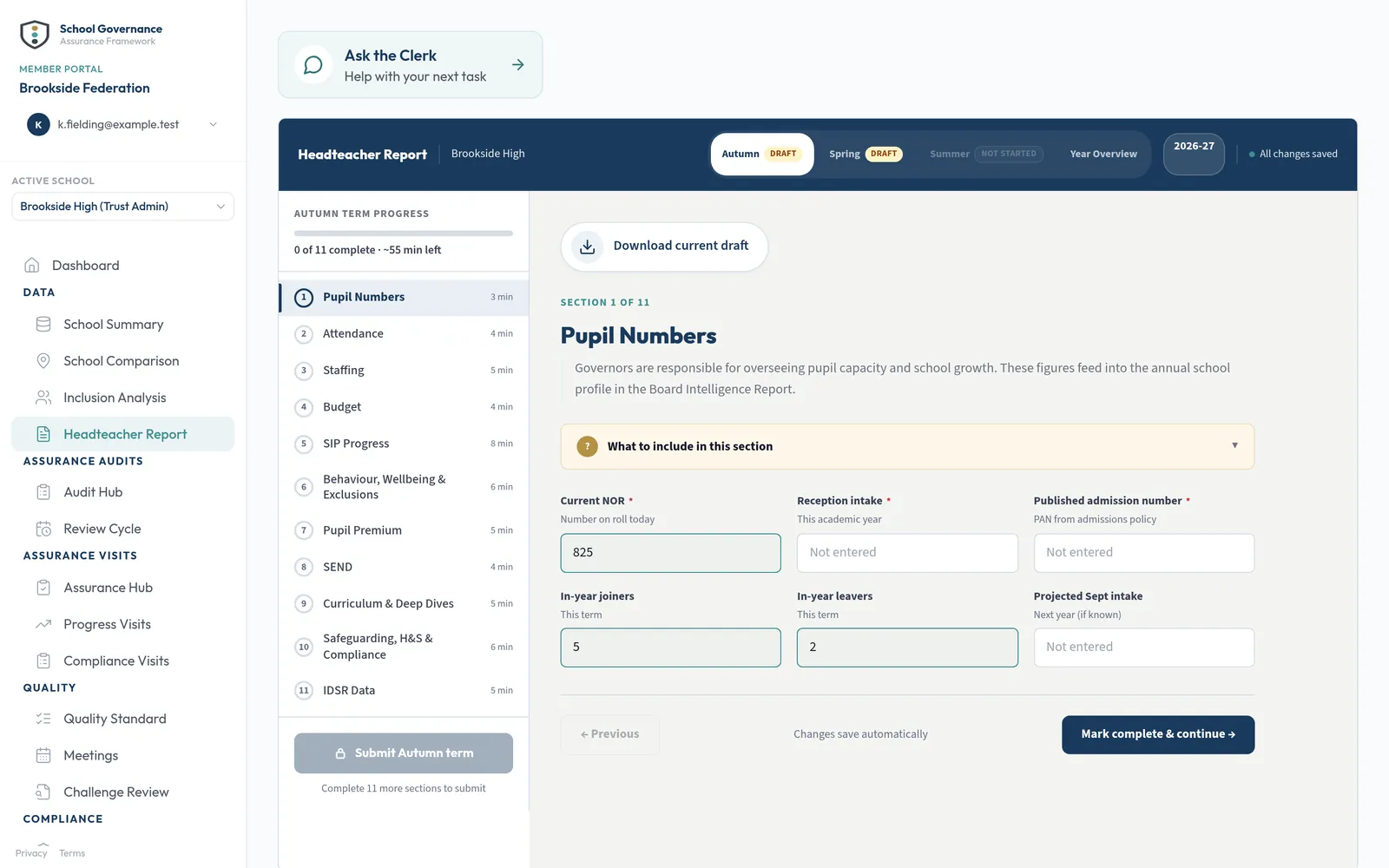 (opens the full-size screenshot in a new tab)
The result
The school's own voice in the assurance chain, and the internal half of the Board Intelligence Report.