The problem
Most boards find out what was not in place after something goes wrong. And the person who knows an area, the safeguarding lead or the business manager, is rarely the person filling in the board's paperwork.
What I built
A set of quick checks, each a short run of questions rated Not in place, Developing or Secure, covering areas from safeguarding readiness, finance and attendance to Martyn's Law, cyber security, data protection, careers and estates. A result shows a posture band, the counts behind it and the change since the last run. Answers save as they go, so a half-finished check can be picked up later.
Any check can be delegated. The board sends it to the colleague who holds the knowledge with a complete-by date. They answer on a private link with no account, reminders are chased automatically, and nothing joins the record until the board has reviewed and accepted the answers.
Design decisions
The page is organised around three jobs in the order they happen: track what you have, delegate a check, run the next one. The list of checks still to run shrinks as coverage grows. A blind-spot flag appears when a weak result has no named lead and no risk attached, because that combination is the one that gets missed.
What you can see
One grid showing every check with its latest result, named lead, risk state and next action, with anything waiting on the board lifted to the top.
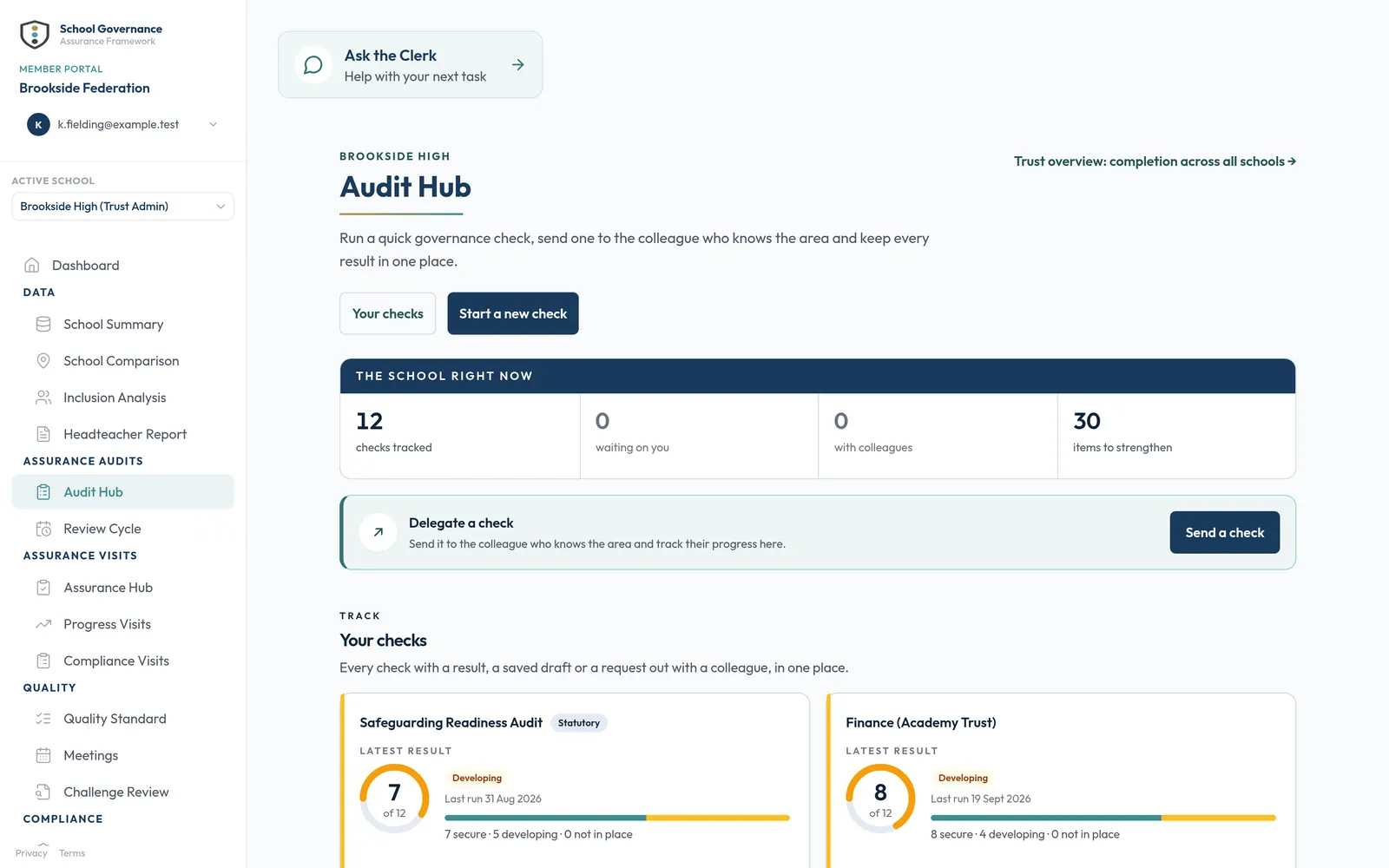 (opens the full-size screenshot in a new tab)
The result
A weak area becomes action in one step. Add to risk register carries it into the Risk Register with a category, a starting score and the audit's own actions, and Plan visit sends it to the visit builder so a governor looks in person.