The problem
Clerks rebuild agendas from last year's document and hope nothing statutory has been missed. Items drift off the agenda when the year gets busy: the safeguarding review that never made the spring meeting, or the Pupil Premium review nobody scheduled.
What I built
Nine meeting types that cover the governance year: the Full Governing Body, Resources, Curriculum, Pay, Headteacher Performance, Safeguarding Review, Skills and Training, Complaints and Exclusions. Each card shows the cadence, the chair role, the quorum, the last meeting held and what is due next.
A new agenda opens with the standing items and the current term's statutory items already ticked. Every statutory item carries a red dot mapped to its source in statutory guidance, the governance handbook or Keeping Children Safe in Education. Suggestions draw on the time of year, the meeting history and the priorities in the Board Intelligence Report, so they fit that school in that term. A live preview matches the final document as items are ticked.
Design decisions
Status is honest. A meeting with no record stays neutral, and Overdue only appears when the school's own history shows that meeting is part of its cycle. A board that does not hold a meeting, for example where pay is handled at trust level, can set it aside without losing its template or its past records.
What you can see
A branded Word agenda ready for board papers, and a matching minutes template with space for discussion, challenge, decisions, actions, confidential items and the chair's sign-off.
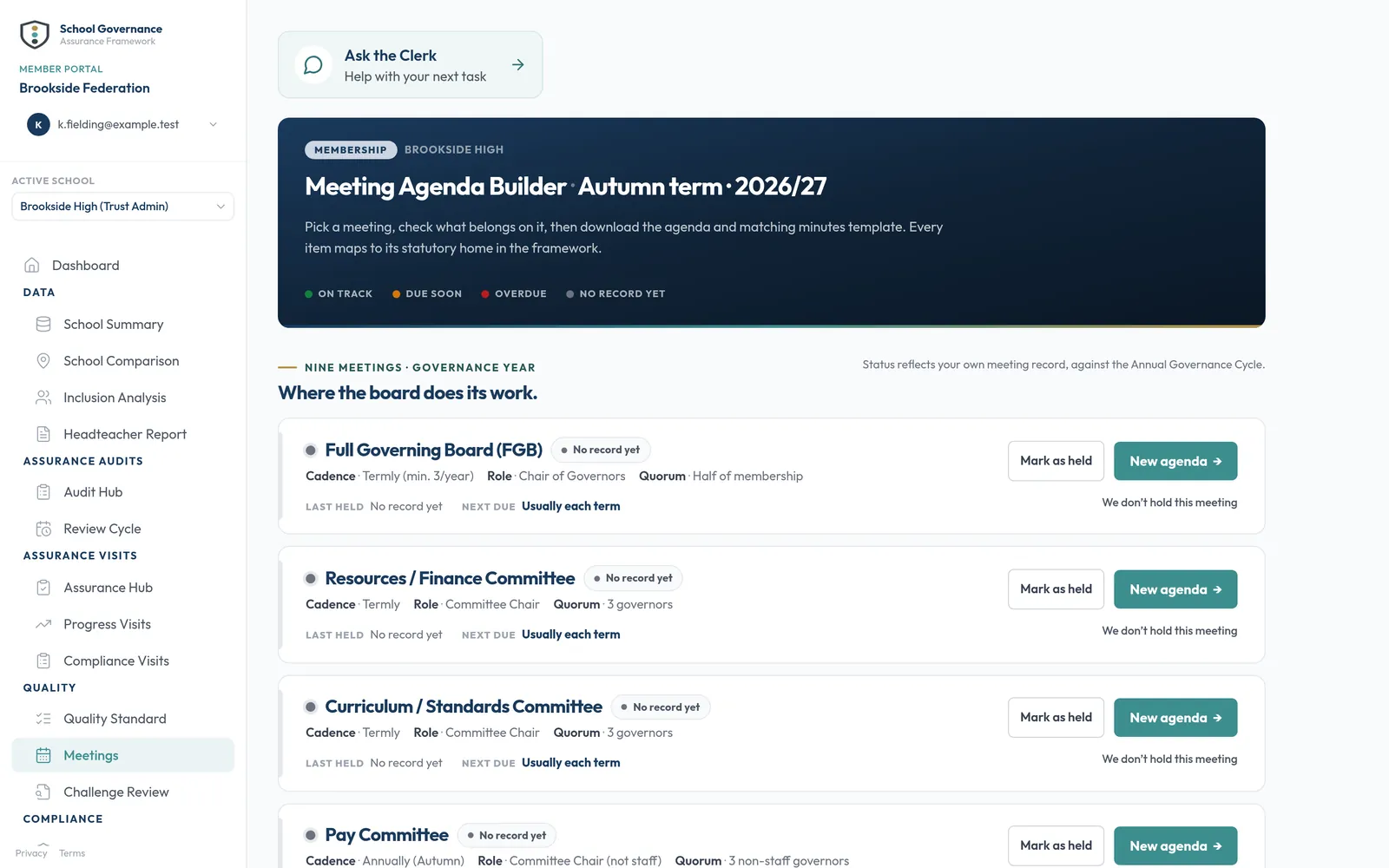 (opens the full-size screenshot in a new tab)
The result
Agendas that carry the statutory duties without the clerk having to remember them, and a meeting record that shows the board's rhythm to any reviewer.